
All You Need to Know About Local Law 11 (FISP) in NYC
For anyone owning or managing a building in New York City, particularly those over six stories tall, Local Law 11 is a critical regulation to understand. Officially known as the Facade Inspection Safety Program (FISP), this law is designed to protect public safety by ensuring the structural integrity of building facades and preventing falling debris.
What is Local Law 11 (FISP)?
Enacted in 1998 as an update to Local Law 10 of 1980, Local Law 11 mandates periodic inspections of exterior walls and appurtenances of buildings taller than six stories in New York City’s five boroughs. The law was a direct response to tragic incidents of falling debris causing serious injuries and fatalities.
Why is it Important?
The core purpose of LL11 is public safety. New York City’s climate and urban environment can take a toll on building exteriors, making regular assessments crucial. By identifying and addressing potential hazards like cracked masonry, loose anchors, or deteriorating materials, the law aims to prevent accidents and maintain the safety of pedestrians and property.
Key Requirements and Cycles:
- Applicable Buildings: Buildings greater than six stories in height, including those six stories above a basement or with a penthouse floor.
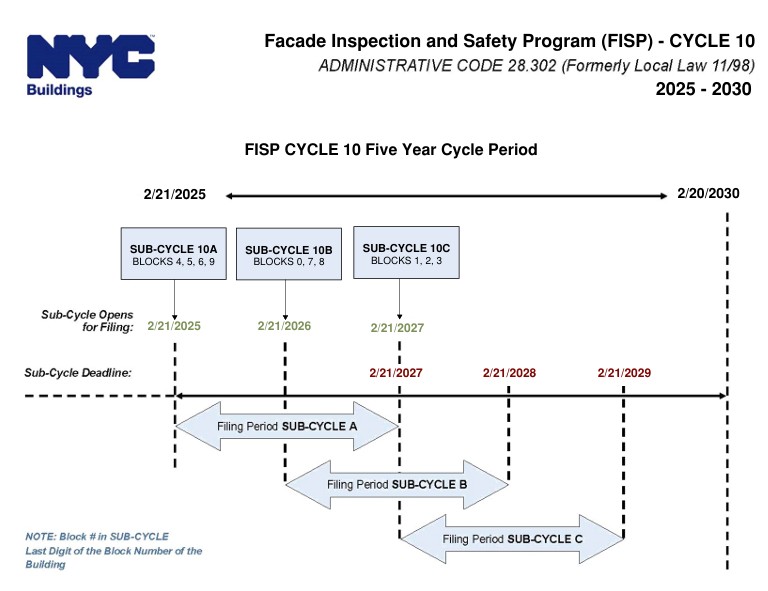
- Inspection Frequency: Inspections are required every five years, following specific “cycles” set by the NYC Department of Buildings (DOB). The current cycle (Cycle 10) commenced on February 21, 2025, and runs through February 21, 2030.
- Qualified Inspectors: Inspections must be performed by a Qualified Exterior Wall Inspector (QEWI) – a licensed architect or engineer with specific experience approved by the DOB.
- Comprehensive Examination: Unlike its predecessor, LL11 requires a “critical examination” of all exterior walls (not just street-facing ones) and appurtenances (like balconies, railings, air conditioning units, and signs). This often involves physical inspection from scaffolding or other observation platforms, and in some cycles, cavity wall probes are mandated.
- Reporting: After the inspection, the QEWI files a detailed report with the DOB, classifying the building’s facade into one of three categories:
- SAFE: No issues detected; the building is in good condition and will remain so for the next five years.
- SAFE With a Repair and Maintenance Program (SWARMP): Issues exist that are not immediately hazardous but require repair or maintenance to prevent deterioration into an unsafe condition. These must be addressed before the next inspection cycle.
- UNSAFE: Conditions pose an immediate danger to public safety and require urgent repairs. Protective measures, such as sidewalk sheds, must be installed immediately.
Compliance and Penalties:
Compliance with Local Law 11 is not optional and carries significant consequences for non-compliance:
- Late Filing Fees: $1,000 per month for late initial report filing.
- Failure to File Penalties: $5,000 per year.
- Failure to Correct Unsafe Conditions: Additional fines and potential emergency repairs ordered by the city at the owner’s expense.
- Uncorrected SWARMP Conditions: If SWARMP conditions from a previous cycle are not corrected, they will be reclassified as UNSAFE in the subsequent cycle, leading to further penalties.
Recent Changes and Future Outlook:
Recent amendments, such as Intro 394-A, aim to reform aspects of LL11. While the five-year cycle has been the standard, there’s a study underway to evaluate the inspection frequency, with recommendations for longer intervals (6 to 12 years) for some buildings. These changes also address the issue of ubiquitous sidewalk sheds, aiming for their reduction.
What Building Owners Should Do:
- Determine Your Building’s Cycle: Understand your building’s specific filing deadline within the five-year cycle.
- Hire a QEWI Early: Engage a qualified inspector well in advance of your deadline to allow ample time for the inspection and any necessary repairs.
- Budget for Repairs: Proactively allocate funds for facade maintenance and potential repairs.
- Maintain Records: Keep thorough records of exterior repairs, permits, and inspection reports.
- Ensure Accessibility: Make sure all areas of your building’s exterior, including roofs, terraces, and fire escapes, are accessible for inspection.
Navigating Local Law 11 can seem complex, but proactive planning and working with experienced professionals are key to ensuring compliance, avoiding costly penalties, and, most importantly, safeguarding your building and the public.
 Ethos PM Group
Leave a comment